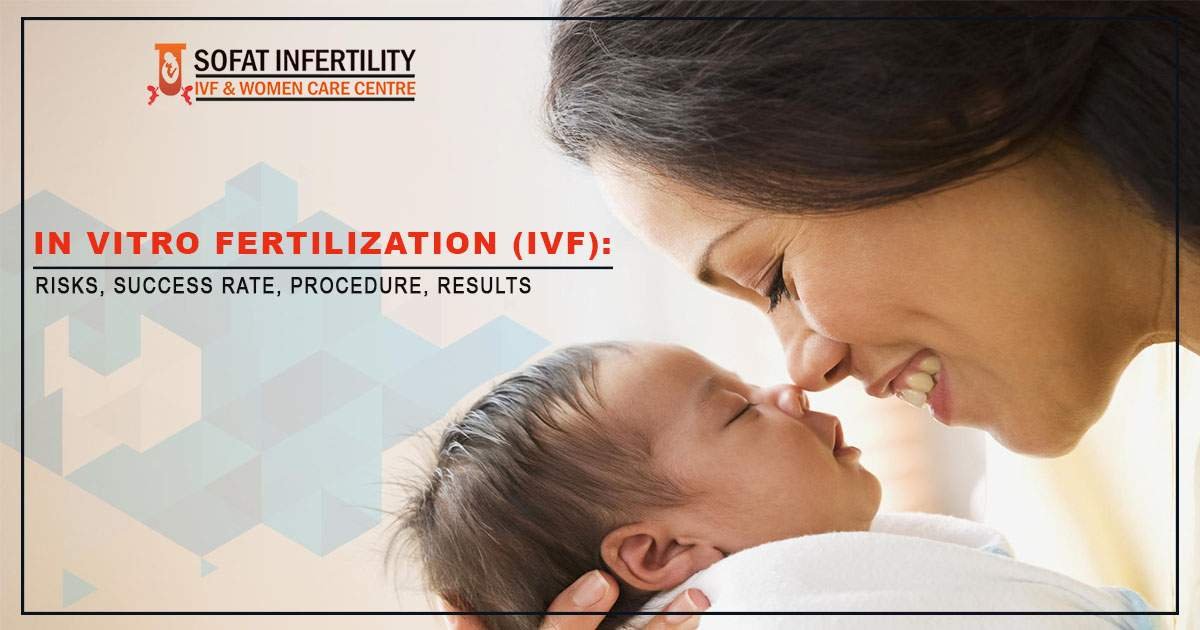
Know briefly about Vitro Fertilization (IVF) Procedure, Success Rate Results and more. IVF process has come a long way since then and now occupies the top position among the Infertility Treatment methods.
IVF is a well-known name these days. However, some decades ago it was a sort of a mystery as to how could a baby be born out of a test tube. 1978 saw the birth of the first test-tube baby. IVF is an important methodology for male Infertility Treatment. If you want to avail IVF, you must visit the IVF centre in your city.
IVF procedure
IVF Process is more complex than other processes. If we take a look at the artificial insemination process, the process is much simpler in which the sperm is placed in the uterus of the female, hoping that the conception will take place. In contrast, IVF consists of many steps; the most important one is the fertilization of the egg with the sperm of the partner under lab conditions. In the first step, the menstrual cycle of the woman is analyzed. She is given medication to enable the production of multiple eggs in one cycle. Upon maturation, the eggs are extracted from the woman's body. Around the same time, the male partner is told to deposit his sperm sample. The eggs and the sperms are placed in a petri dish so that the eggs can get fertilized. After fertilization, the embryo formed is paced into the woman's uterus. If all goes well, it gets successfully implanted and the woman tests positive for pregnancy. Apart from being complex, IVF treatment is an expensive procedure and that's exactly the reason why many couples don't opt for it. But the figure of couples who have opted for it since the last few decades is quite encouraging.
Which Infertility problems can IVF Treat?
IVF is recommended in the following cases-
- Endometriosis in females
- Low sperm count in males
- If the female has problems with her uterus or her fallopian tubes are blocked
- If the woman has problems with ovulation
- If the woman's immune system makes antibodies that harm sperm or eggs
- If the male sperm is unable to penetrate or survive in the cervical mucus
- If the female has poor egg quality
- If the mother or father suffers from a genetic disease of mother or father
- If the couple has unexplained infertility
Book Consultation
Speak with our senior IVF specialists in Ludhiana.
Recent Guides