How Normal Pregnancy Occurs
For pregnancy to occur there has to be transportation of the sperms across the vagina, cervix and uterus to the distal part of the fallopian tubes, growth and development of a normal follicle, ovulation, transport of the ovulated ovum to the distil portion of the fallopian tubes, fertilization and transport of the gamete to the fallopian tube and to the uterus where proper nidation and further development of the embryo can take place.
When any step in this biological cascade is disrupted—whether due to hormonal imbalance, cervical hostility, or structural blockage—female infertility arises. Understanding these precise requirements is the foundational step toward targeted medical restoration.
Key Milestones in Normal Conception
Sperm Transportation & Cervical Passage
Sperms navigate across the vagina, receptive cervix, and uterine cavity into the distal fallopian tubes.
Follicular Maturation & Ovulation
Growth and development of a healthy ovarian follicle, releasing a mature ovulated ovum at the fertile window.
Gamete Transport & Fertilization
Transport of the ovulated ovum to the distal fallopian tube where union of sperm and egg takes place.
Embryo Transit & Uterine Nidation
Smooth transport of the gamete into the uterus where proper nidation and healthy fetal growth continue.
Causes of Female Infertility
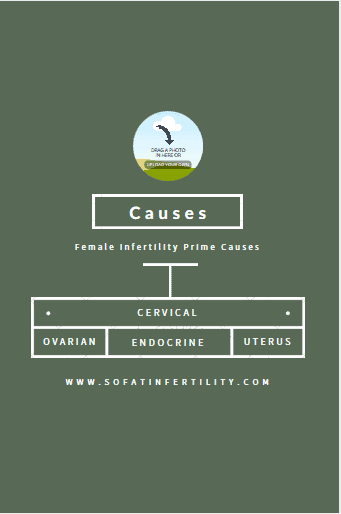
Infertility in females is multi-factorial, stemming from cervical barriers, ovarian dysfunctions, endocrine disruptions, or uterine and tubal structural factors:
Cervical Causes
The cervix is the gateway for sperm transit. Abnormalities in cervical secretion or structure prevent sperm from entering the uterus.
Ovarian Causes
Irregular or absent egg production prevents fertilization from taking place during the natural menstrual cycle.
Endocrine Cases
Hormone regulation from the brain, thyroid, and adrenal glands directly commands follicle growth and uterine lining receptivity.
Uterus & Tubal Causes
Structural uterine defects or infected fallopian tubes hinder gamete transport and embryo nidation in the endometrial cavity.
Immunological & General
Physical, psychological, and lifestyle stresses disrupt metabolic balance and normal reproductive signaling.
Donor Eggs & ART
Around 50 percent of women who are over age 35 and who turn to Assisted Reproductive Technology (ART) as a treatment decision utilizing donor eggs or incipient organisms (embryos) to conceive. Consistently, this procedure speaks to around 2,800 babies conceived in India.
Intrauterine Insemination (IUI) → Artificial Insemination
Intrauterine insemination (IUI) includes a lab system to divided quick moving sperm from more lazy or non-moving sperm. The quick moving sperm is then set into the lady’s womb near the time of ovulation when the egg is discharged from the ovary amidst the month to month cycle.
Artificial Insemination can help you conceive on the off chance that you have a sperm anaphylaxis or if your accomplice has a low sperm count or poor sperm motility, which implies that his sperm can’t make the long trip to the egg.
Egg Donation vs Embryo Donation
Difference between egg donation/Donor eggs and embryo donation/embryo transfer:
Egg Donation Overview:
Proposed mother AND father are not identified with the child. As a rule, you will have a far less achievement rate (around 20-30 percent). Much lower in expense. Hold up times for a matching contributor is generally more than egg donation.
Key Reasons of Infertility in Females & Pregnancy Procedure
For successful conception to occur, four essential reproductive conditions must be satisfied:
Ovulation: A female requires to ovulate that means developing eggs. You can take help of your physician to determine your ovulation.
Healthy Sperm Quality: It is a general thing for many couples unless a male partner has suffered from severe sickness earlier or surgical treatment. A series of tests can be conducted to determine the healthy level of male’s sperm.
Fertile Window Timing: Regular intercourse is needed during the fertile period. You can take assistance of your doctor in understanding when you are highly fertile.
Open Tubes & Receptive Uterus: Your fallopian tubes should be open and uterus should be in normal condition. It is because eggs and sperms meet in fallopian tubes and there should be a sufficient space for pregnancy growth.
Clinical Overview: Primary Reasons of Infertility in Females
Main Causes of Infertility in Females
Infertility in females is resulted by different causes such as: Ovulation problems, damaged and clogged fallopian tubes, diseases in uterine, age adds significantly to infertility because a female widely loses her fertility potential with increasing age.
Ovulation Problems
The disorders in ovulation result into 20 – 30% of infertility. A normal adult female generally ovulates within 25 to 32 days. This is a procedure of maturing eggs that have been relying in ovaries from their development. Every day in the whole life of a female before she hits menopause, several eggs move from resting stage to an active stage.
Fallopian Tube Damage
Fallopian tube damage is a major cause of female infertility. Damaged fallopian tubes cannot ovum and sperm converge, so preventing fertilization. These tubes are also called as oviducts and uterine tubes. There are several factors that cause fallopian damage such as pelvic inflammatory disorder, pelvic surgery and pelvic tuberculosis.
Uterine Problems
Womb is an area in a female where a baby grows once a females becomes pregnant. The problems can be related with adenomyosis, polyps, cancer and infection resulting in to failed implantation. Many uterine causes have a direct impact on fertility of a female.
Various Ovulation Disorders
Ovulation disorders describe infrequent or no ovulation at all. It can be caused by different types of problems such as polycystic ovary syndrome, hypothalamic dysfunction, early ovarian deficiency, extensive prolactin etc.
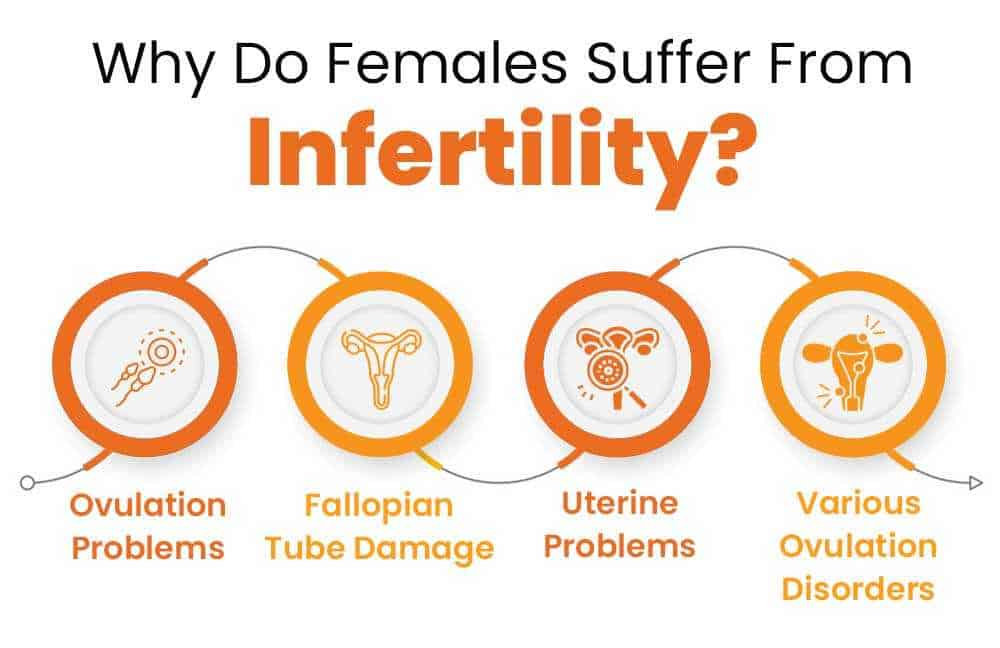
Pathology Guide: Why Females Suffer Infertility
Evaluation Test for Female Infertility
There are several factors that contribute into female infertility but the problem is that all of these factors are hard to identify. A complete analysis of your body can be helpful to determine the possible chances of becoming pregnant. Each type of treatment comes with some side effects, price, chances of multiple pregnancy and success rates.
Determining the Hormonal Level
A female’s fertility potential is determined by hormones. Brain glands and ovaries release the hormones that have a considerable effect on menstrual cycles and her fertility. As many females reach mid-life, variation in hormones stress the reproductive parts to cease, and finally menopause occurs.
Who is Eligible for Test?
If you are facing problems in becoming pregnant, you should definitely chose testing in case there is no problem with your fallopian tubes. Moreover, testing should be conducted if you have irregular menstrual cycles and extensive vaginal bleeding, tiredness, mood swing, low sexual arousal, poor muscles and increased body fat.
What Does the Test Include?
- Hormone Panels: 2nd and 3rd day FSH, LH and S Estradiol
- Thyroid Checkup: Complete TSH, T3 & T4 profiling
- Ovarian Reserve: Anti-Mullerian Hormone (AMH) checkup
- Ultrasound: Pelvic ultrasound is conducted to observe the ovaries, uterus, cervix and fallopian tubes state in a female.
- X-ray (HSG): A hysterosalpingogram that is a type of X-ray test in which a doctor deeply observes uterus and fallopian tubes and their surrounding parts. In this test, a dye is placed in a fine tube that enters into female’s vagina and then moves towards her uterus. The uterus and fallopian tubes are connected, so the dye enters into the tubes as well to collect pictures for any kind of wounds or abnormal structure of these organs. A block if present is detected that could hinder the combination of sperm and eggs. Other problems are also found if occur through this test.
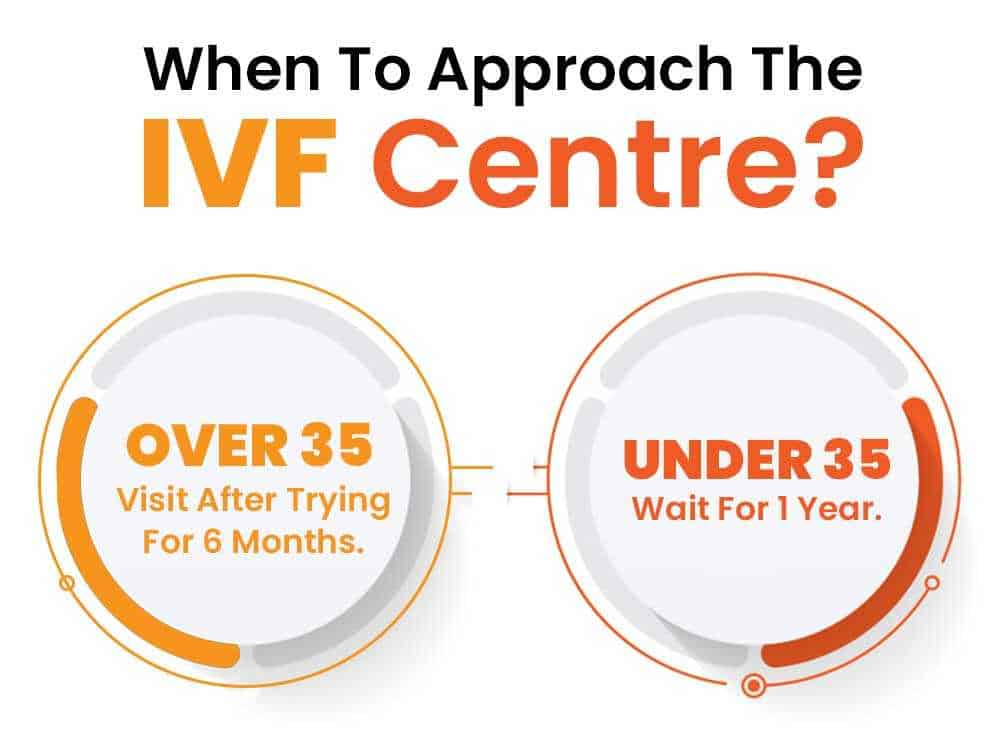
Evaluation Guide: When to Approach IVF Centre
What Does an Infertility Treatment Include?
An infertility treatment includes different medications and lifestyle changes that can significantly help you conceive. However, when such methods fail, then advanced infertility treatment such as IVF is done with the aim of increasing your ability to conceive and enjoy the beautiful phase of parenthood.
29+
Years of Clinical Mastery
1,00,000+
Couples Blessed with Parenthood
75%
Consistent Clinical IVF Success
Global
Health Award – UK Parliament
Led by Dr. Sumita Sofat – Pioneer in Reproductive Medicine
Dr. Sumita Sofat is widely acclaimed as Punjab's most accomplished infertility specialist. With nearly three decades of dedicated clinical practice, she has successfully treated complex cases of female infertility, recurrent implantation failures, and severe endometriosis.
- Individualized protocols with no cookie-cutter treatments
- State-of-the-art cleanroom IVF laboratory with Laser Hatching
- Transparent pricing with compassionate psychological counseling

Dr. Sumita Sofat IVF Hospital
Punjab's Premier Fertility & Women Care Centre
Frequently Asked Questions
Comprehensive answers to essential questions regarding female infertility, diagnosis, and IVF procedures: