What is Sperm Morphology?
The normal sperm development ‘spermatogenesis’ in a man’s testicles is defined by an array of factors and sperm morphology is one of them. Any compromise with the normal production of sperms may induce low sperm count, sperm abnormalities, poor quality, motility hence male infertility.
Sperm morphology is a general term that describes the sperm’s shape and size (anatomical appearance). When the sperm has a normal shape and size (head & tail) this is referred to as normal sperm morphology. In case the sperm has defects either with the head, tail, or in the midsection, this is referred as an abnormal sperm morphology or Teratozoospermia.
Just like females, men also have a major role to play for reproduction to occur. According to laboratory results, a majority of males tend to have a normal sperm count, but when the sperm morphology is evaluated, more than 60% of the sperms are abnormal. An abnormally shaped sperm increases a man’s chance of infertility since the sperm can’t fertilize the ovum. There are a variety of factors that can trigger Teratozoospermia in males.
Strict Kruger Criteria
Morphological ThresholdsUnder strict evaluation criteria, a sample is classified as Teratozoospermic when normal forms fall below clinical cutoffs. High-magnification digital IMSI selection overcomes these structural hurdles.
Key Morphological Zones:
- Acrosome Cap: Must cover 40-70% of head
- Smooth Oval Head: Length 4.0-5.5 μm
- Straight Midpiece: Axis aligned with head
- Single Slender Tail: Uniform uncoiled motility
What Defines a Normally Shaped Sperm?
Normal morphological standards versus anatomical defect variations across head, midpiece, and tail:
Standard Traits of Normal Sperm:
- A sperm must have a well-defined cap covering the sperm head
- The sperm’s head must be oval and smooth
- The sperm must have a properly shaped neck, a midpiece, and a tail
- The sperm shouldn’t contain large drops of fluid in the head of the cell
Abnormal Structural Traits:
A sperm with no such traits is termed as abnormal and may move ahead to have:
- A rough head
- Two Heads
- Two Tails
- A misshapen acrosome
- A long head
- Giant in appearance
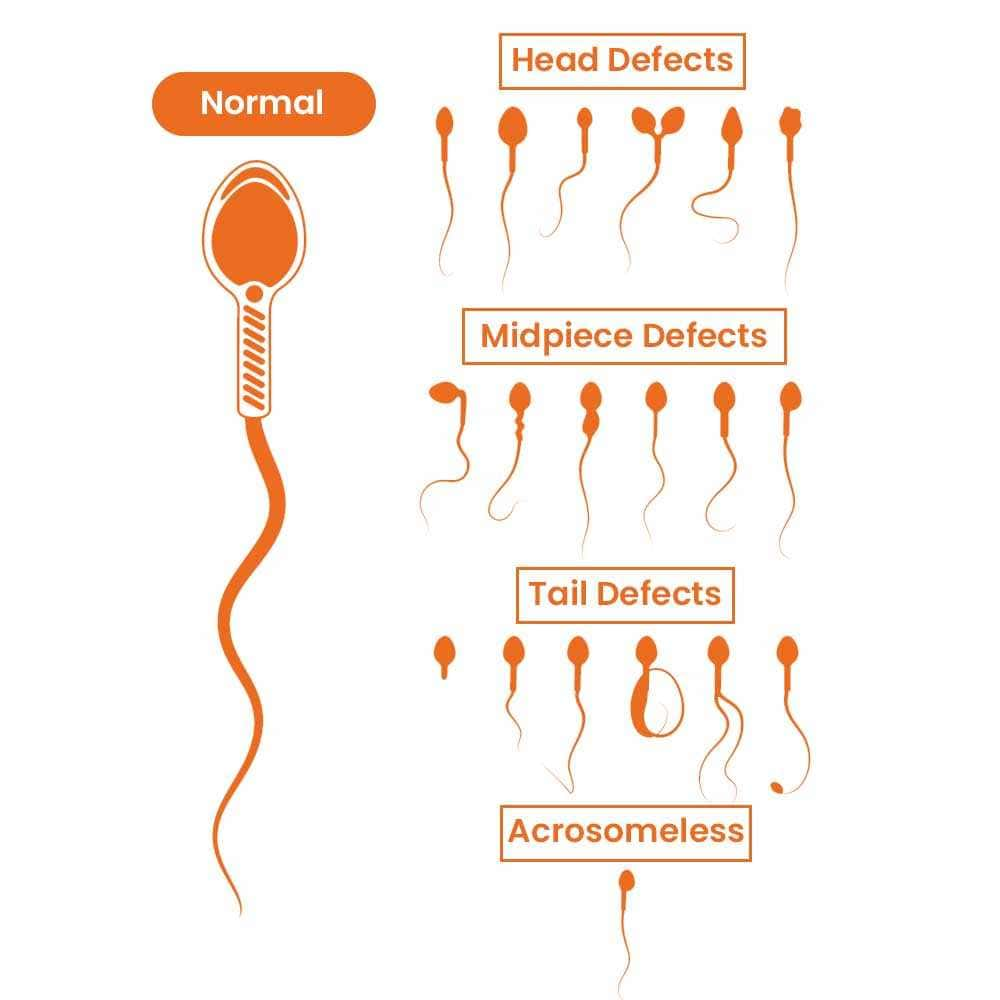
Morphological Atlas: Normal Sperm vs Head, Midpiece, Tail Defects & Acrosomeless Variants
Causes of Teratozoospermia in Modern Men
According to recent studies, male infertility is soaring and although sperm counts remain to be a major concern, Teratozoospermia cases are crucial since they don’t have a definite treatment approach. The following are believed to be Teratozoospermia triggers in males:
Genetics
Males with Teratozoospermia traits have higher chances of passing them to their boy children.
Oxidative Stress
This is a major cause of abnormal sperm morphology induced by free radicals in the cells in the body.
Exposure to Toxic Chemicals
These include excessive heat, heavy metals and pesticides that can alter the sperm’s shape.
Lifestyle
Lifestyle factors that can cause an abnormal sperm morphology include smoking, alcoholism, obesity and a poor diet.
Age
Chances of an abnormal sperm morphology are believed to increase as you age since the body’s ability to fight free radicals is reduced.
Medical Factors
Chronic diseases and infections can easily trigger an abnormal sperm morphology in conjunction with some medications.
Teratozoospermia Diagnosis & Treatment
Evidence-based diagnostic evaluation, antioxidant protocols, and advanced ART solutions:
Teratozoospermia Diagnosis
A semen analysis is necessary to diagnose Teratozoospermia in case a male suffers from infertility. In the laboratory, your semen sample will be examined for any defect, and other concerns looked at are sperm count, motility, and quality. The results of your semen analysis define the treatment to utilize.
Selenium & Coenzyme Q10
Fertility experts currently utilize selenium and coenzyme Q10 to treat Teratozoospermia. Other medications include testosterone and hoemeopathic pills. Others may also proceed to Ayurvedic medicines.
Targeted Dietary Regimen
High-protein foods, Vitamin E, Vitamin C, and anti-oxidants sources are recommended for males with Teratozoospermia.
Assisted Reproductive Technologies
Advanced technologies such as IVF and ICSI are currently an open gate to parenthood. Intracytoplasmic sperm injection (ICSI) is generally conducted in cases of male infertility while In Vitro Fertilization (IVF) is an alternative for all infertility cases.
Is Teratozoospermia Treatment Affordable?
The affordability of your treatment generally depends on the treatment approach selected. Teratozoospermia Treatment cost in Punjab isn’t that dissimilar to oligospermia or azoospermia treatment, necessary to eliminate male infertility.
Chances of Birth Defects With Teratozoospermia
According to studies, children born of men with Teratozoospermia are healthy with no birth defects. However, Teratozoospermia is a genetic condition that can also be passed on to your child.